
From the source material
1 / 2
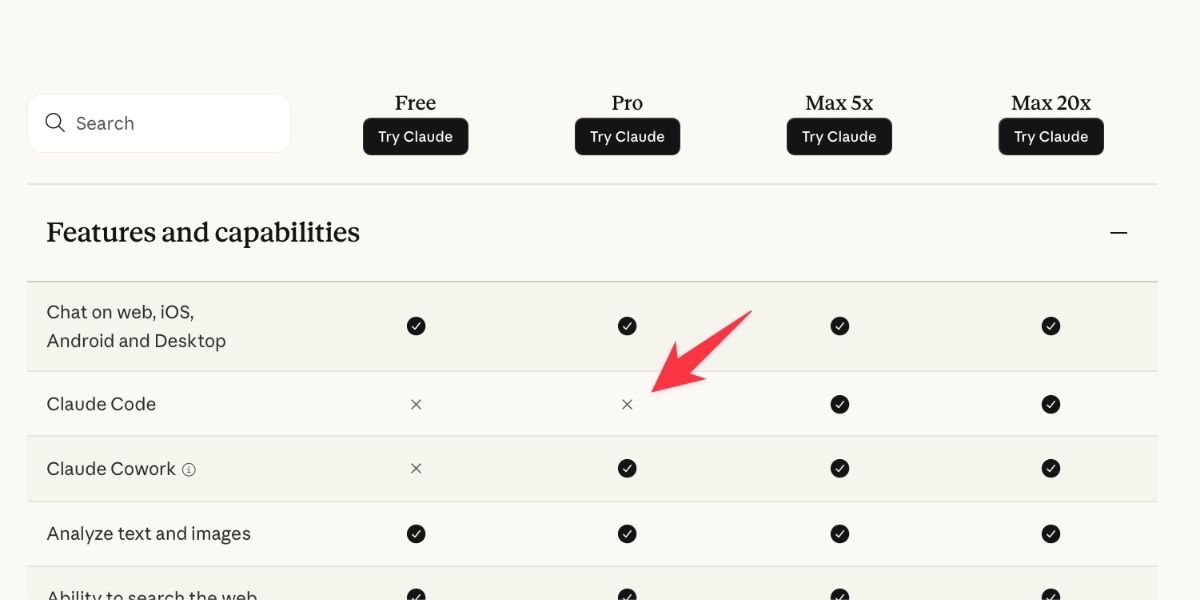
Image from Simon Willison.
2 / 2
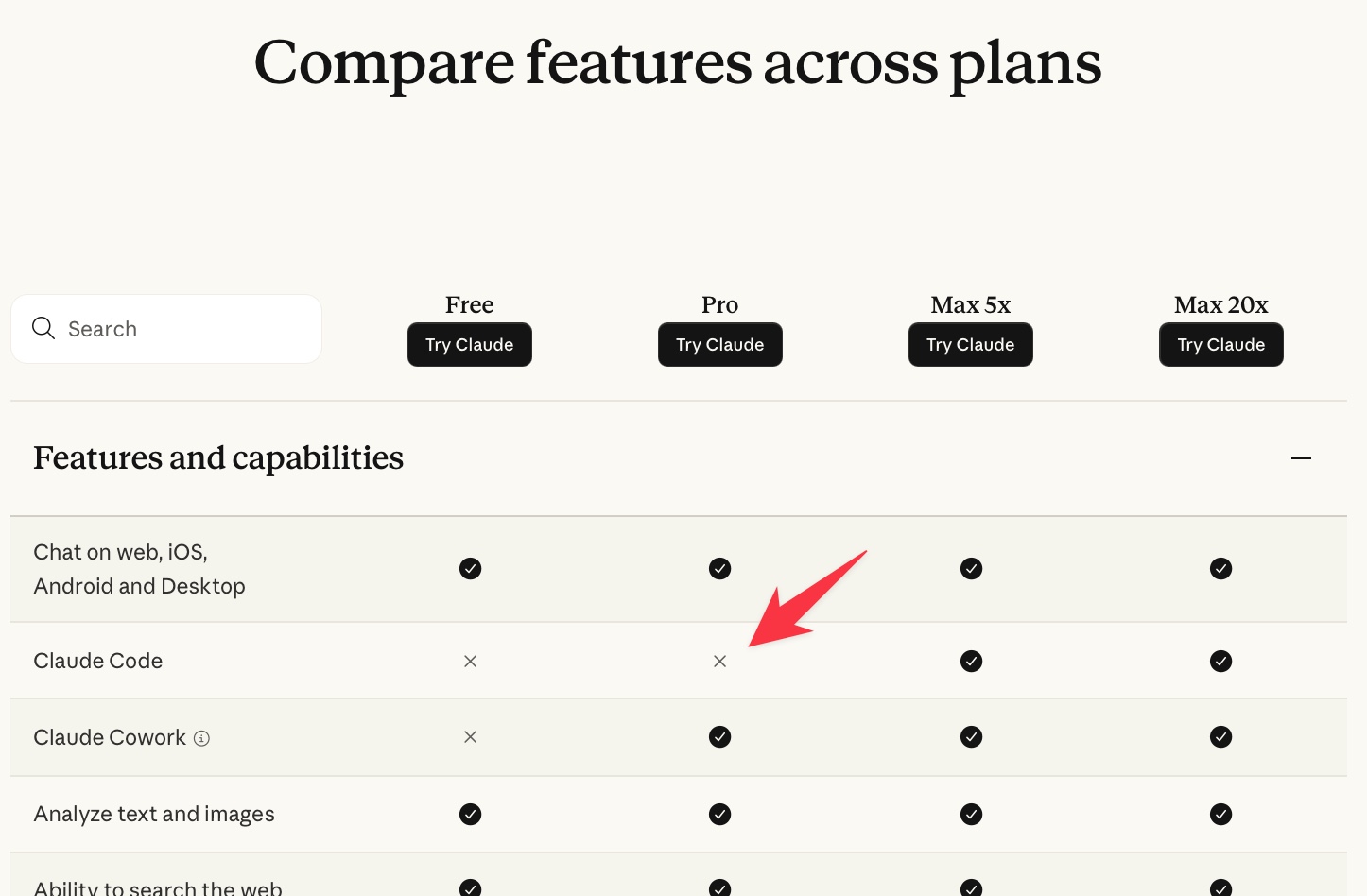
Image from Simon Willison.
For a few chaotic hours, Anthropic’s pricing page appeared to say Claude Code belonged behind $100/month and $200/month Max plans instead of the standard $20/month Pro plan. It eventually reverted, and Simon Willison's running coverage of the Claude Code confusion captured the screenshots, community reaction, and the “small test” explanation from Anthropic’s Head of Growth. While the narrow billing question was temporary, the trust question lingered. Developers experienced access to a tool they were adopting as fundamentally unstable before the company offered a clean public explanation.
Pricing pages are product surfaces, and surprise pricing changes turn them into haunted ones. For coding agents, commercial reliability sits right next to model quality and security posture. If a team is documenting a workflow and letting a tool touch daily engineering work, plan stability is rollout infrastructure, not a finance footnote. Unpredictable pricing is how adoption slows without a dramatic revolt; teams just stop recommending the tool as standard and decide to wait until pricing stabilizes. Anthropic does not need to promise eternal pricing, which would be unrealistic, but it does need boring clarity early enough that developers do not have to monitor a pricing grid like weather radar. Claude Code can recover because useful tools get second chances, but the market has now learned to look for price movement, meaning future changes must be communicated before workflows get jump-scared again.
In short
Anthropic explained visible pricing confusion as a small test, but developers heard a warning to keep an exit ramp. Pricing stability is rollout infrastructure for coding tools.
Keep the signal coming
Useful AI, fewer talking points.
Follow Useful Machines for practical AI news, workflows, tools, and strategy. Sponsors can also evaluate whether this article belongs in the practical ai readers lane.