
From the source material
1 / 1
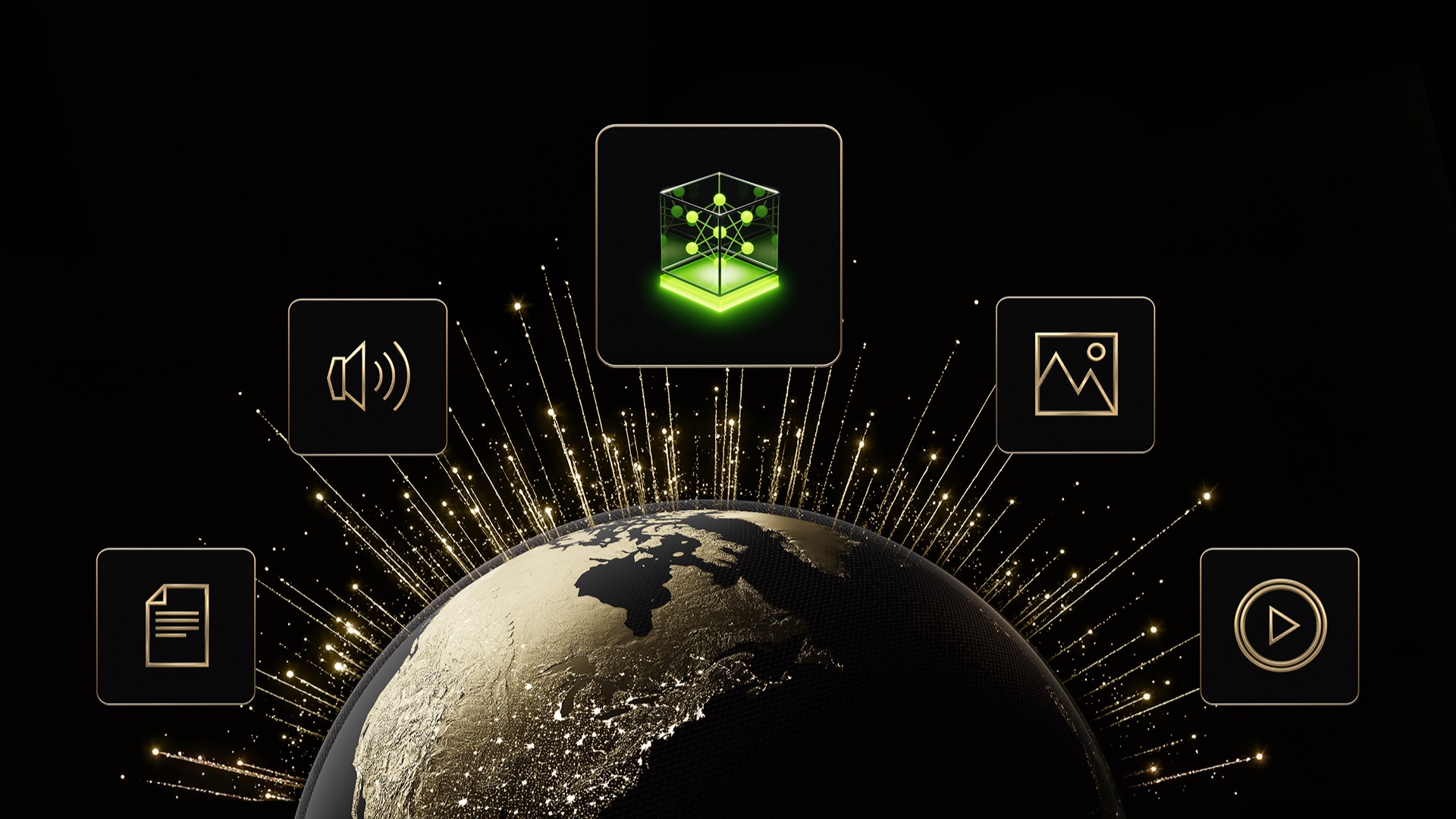
NVIDIA is positioning Nemotron 3 Nano Omni as the perception layer for agents that need to combine documents, screens, audio, video, and text. (Image: NVIDIA)
Unsloth has posted GGUF builds and a run guide for NVIDIA Nemotron 3 Nano Omni on Hugging Face, which is the practical end of today’s launch: not just “new model exists,” but “can builders actually try to deploy this thing without joining a procurement ritual?” Good enough, cheap enough, and available without a sales call is apparently radical now.
The model itself is NVIDIA’s new open multimodal reasoning system for agents. In NVIDIA’s launch post for Nemotron 3 Nano Omni, the company pitches it as one model that can take in text, images, audio, video, documents, charts, and graphical interfaces, then produce text output for downstream agent workflows. The useful phrase is “eyes and ears.” NVIDIA is not trying to make this the one giant brain that does everything. It is trying to make the perception layer less ridiculous.
That matters because a lot of multimodal agent stacks are currently duct-taped orchestras. One model reads the screenshot. Another transcribes the call. Another summarizes a PDF. Another tries to reason over the fragments. Every handoff loses state, adds latency, and creates one more place for the system to hallucinate its way into a support ticket. NVIDIA says Nemotron 3 Nano Omni combines vision and audio encoders inside a 30B-A3B hybrid mixture-of-experts architecture, with a 256K context window and support for workloads such as computer use, document intelligence, and audio-video reasoning. Translation: fewer separate perception calls, more shared context, less ceremonial glue code.
The performance claim is the shiny part. NVIDIA says the model can deliver up to 9x higher throughput than other open omni models with comparable interactivity, while keeping strong multimodal accuracy. Treat that like a vendor claim, not a law of physics. Still, the direction is important. For agents, the expensive part is often not one majestic answer. It is the grinding loop of reading screens, checking documents, listening to audio, choosing the next action, and doing it again. If a smaller open model can handle that perception loop reliably, it lets teams reserve the expensive frontier brain for planning, judgment, or final review.
NVIDIA’s technical write-up on Hugging Face gives the more builder-relevant version of the story. The model is aimed at long, messy enterprise inputs: 100-plus-page documents, tables, figures, formulas, narrated screen recordings, training videos, meetings with slides, product demos, and GUI automation. It uses the Nemotron 3 Nano 30B-A3B language backbone, a C-RADIOv4-H vision encoder, and a Parakeet audio encoder, with modality-specific projectors feeding into a shared sequence. That is less glamorous than “agentic AI,” which is why it is probably the actual story.
The local deployment angle is where Unsloth becomes more than a launch-day mirror. Its model card notes commercial use, NVIDIA’s open model agreement, llama.cpp and Ollama among supported inference runtimes, and practical download/run guidance. It also lists the boring caveats builders should not skip: the model is designed around NVIDIA GPU-accelerated systems, Linux is the preferred operating system, and full-weight downloads are not small. The BF16 weights are described as roughly 62GB. Open weights do not mean “your laptop is now a datacenter.” They mean you get options, and the options still have physics attached.
The catch is licensing and operational reality. This is not Apache 2.0 open-model utopia; the model card points to NVIDIA’s model terms. That may be perfectly usable for many commercial teams, but it is still a terms-of-use regime you need to read before baking the model into a product. The card also says language support is English only, even though the metadata lists several languages. That is the kind of mismatch that should make a deployment team slow down and test the actual workload instead of trusting the vibes column.
So who should care? If you are building agents that touch rich inputs — support videos, warehouse camera clips, UI recordings, call audio, compliance packets, claims documents, training material, financial tables — this is worth watching. The architecture NVIDIA is describing maps to a real pain: agents need perception that is cheap, fast, repeatable, and controllable. A frontier chatbot can answer a question about a document once. A production agent has to inspect thousands of messy inputs without turning every step into a premium-model invoice.
Who should not care? Anyone looking for a magic general assistant upgrade. Nemotron 3 Nano Omni is more interesting as infrastructure than as a chatbot personality. The best use case is probably not “replace Claude.” It is “give my workflow a dedicated perception worker that can read the screen, hear the audio, parse the document, and hand the planner a coherent state.” That is less sexy. It is also how useful systems tend to get built.
The thing to watch next is not the leaderboard victory lap. Watch the deployment stories: llama.cpp runs, Ollama packaging, vLLM behavior, memory pressure, throughput under real video and document loads, and whether teams can fine-tune or route this model without turning their stack into NVIDIA-only concrete. If Nemotron 3 Nano Omni makes multimodal perception boring and cheap enough, that is a meaningful shift. If it just produces another beautiful benchmark chart that requires heroic hardware and careful demo conditions, toss it into the launch theater bin with the rest of the glossy PDFs.
In short
NVIDIA’s new open multimodal model is pitched as a cheaper perception layer for agents that need to read screens, documents, video, and audio without stitching four models together.
Keep the signal coming
Useful AI, fewer talking points.
Follow Useful Machines for practical AI news, workflows, tools, and strategy. Sponsors can also evaluate whether this article belongs in the agents and developer tools lane.