From the source material

1 / 2
Image from U.S. Copyright Office.
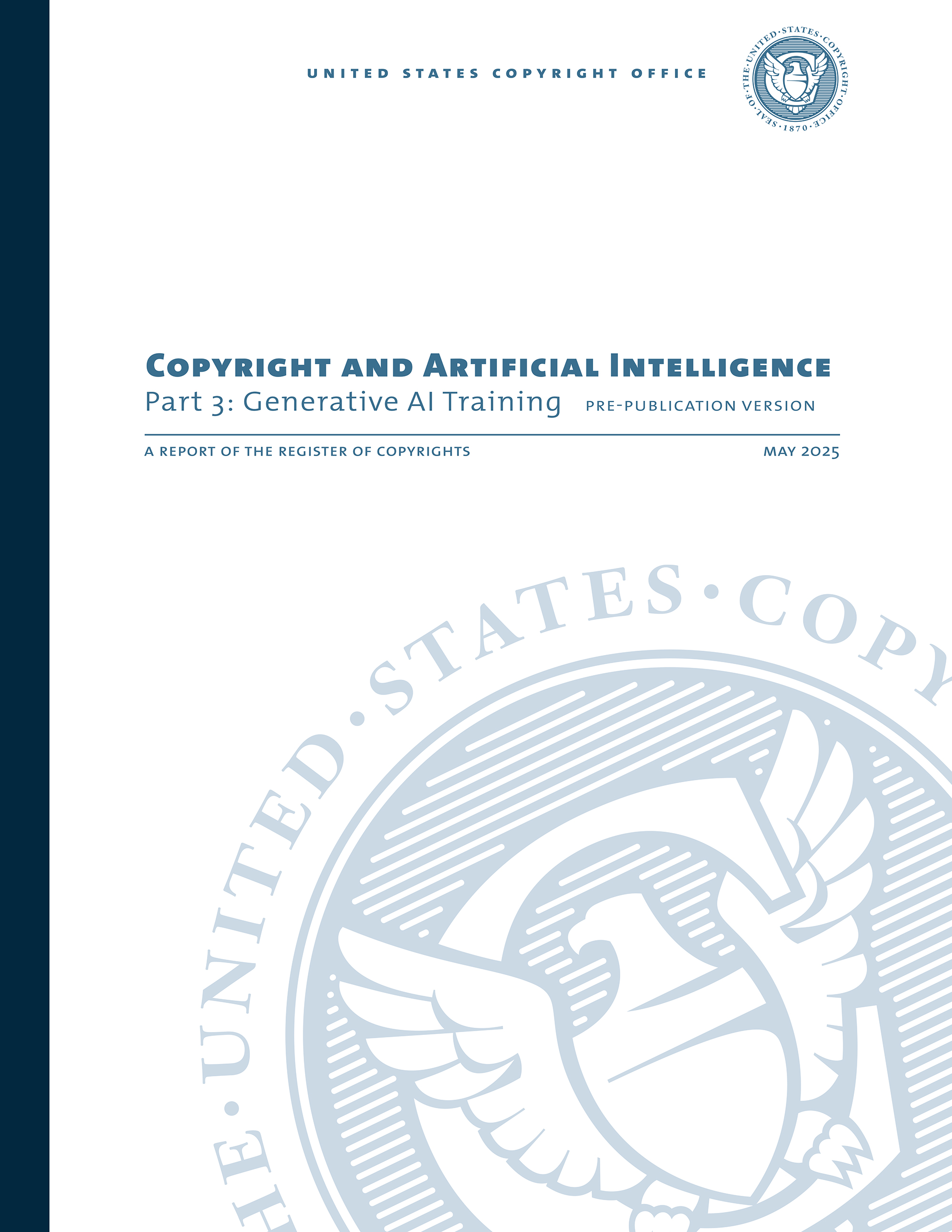
2 / 2
Image from U.S. Copyright Office.
The debate over generative AI and copyright often gets reduced to a legal squabble, but it's fundamentally an argument over memory and extraction. It's about who gets to digest culture into capability, who gets credited, and who vanishes into the machinery once the outputs become profitable. The U.S. Copyright Office’s artificial intelligence initiative stands as one of the clearest public records of this collision. Starting in early 2023, the Office has gathered tens of thousands of public comments and is publishing a multi-part report tackling digital replicas, copyrightability, and generative AI training.
This isn't just bureaucratic throat-clearing; it's a formal acknowledgment that copyright has escaped the legal basement and is currently setting off smoke alarms in the cultural kitchen. Generative models don't learn like humans do—they use statistical processes to absorb the sediment of style, voice, and genre. Creators aren't just asking if a specific work was copied; they are asking if the market value of accumulated human labor has been sucked into systems designed to generate cheap substitutes.
The Copyright Office's structured reports, including the highly anticipated Part 3 on training, force this sprawling outrage into documents, definitions, and evidence. It prevents the debate from flattening into a cartoon where every creator is just nostalgic and every AI company is a hoodie-wearing thief. Copyright has always navigated the messy waters of influence and borrowing, but the sheer scale of AI training changes the moral weather entirely. The fight is over who gets to turn culture into infrastructure, and the Copyright Office is at least trying to make the battlefield legible.
In short
The U.S. Copyright Office’s AI reports provide a public record for the cultural argument artists are making: what happens when human labor becomes the training substrate for its own replacement?
Keep the signal coming
Useful AI, fewer talking points.
Follow Useful Machines for practical AI news, workflows, tools, and strategy. Sponsors can also evaluate whether this article belongs in the trust, safety, and evaluation lane.